Vancouver Public Schools

2026-27 Budget information

Our 2026-27 Budget Challenge

As we plan for next year’s budget, our school board has identified the need for a budget reduction of approximately $20-21 million dollars. 

We want to provide you with relevant and timely information as we go through the budget adoption process. We will continue to have regular updates at board meetings, and will share information and answers to frequently asked questions here so our community is informed and part of this process as we make these very difficult decisions.

You can help us with this effort by sharing questions, concerns, and ideas. These will help inform our process moving forward. Thank you for being committed to the success of Vancouver Public School students.

Share your thougts

We anticipate that community priorities for budget reductions may be similar to those shared during the last reduction cycle, to keep cuts as far away from the classroom as possible, but we want to confirm and hear from you directly. 

Please complete our short survey to provide feedback and share your questions or identify areas where additional clarity would be helpful.

Why do we need to make more budget reductions?

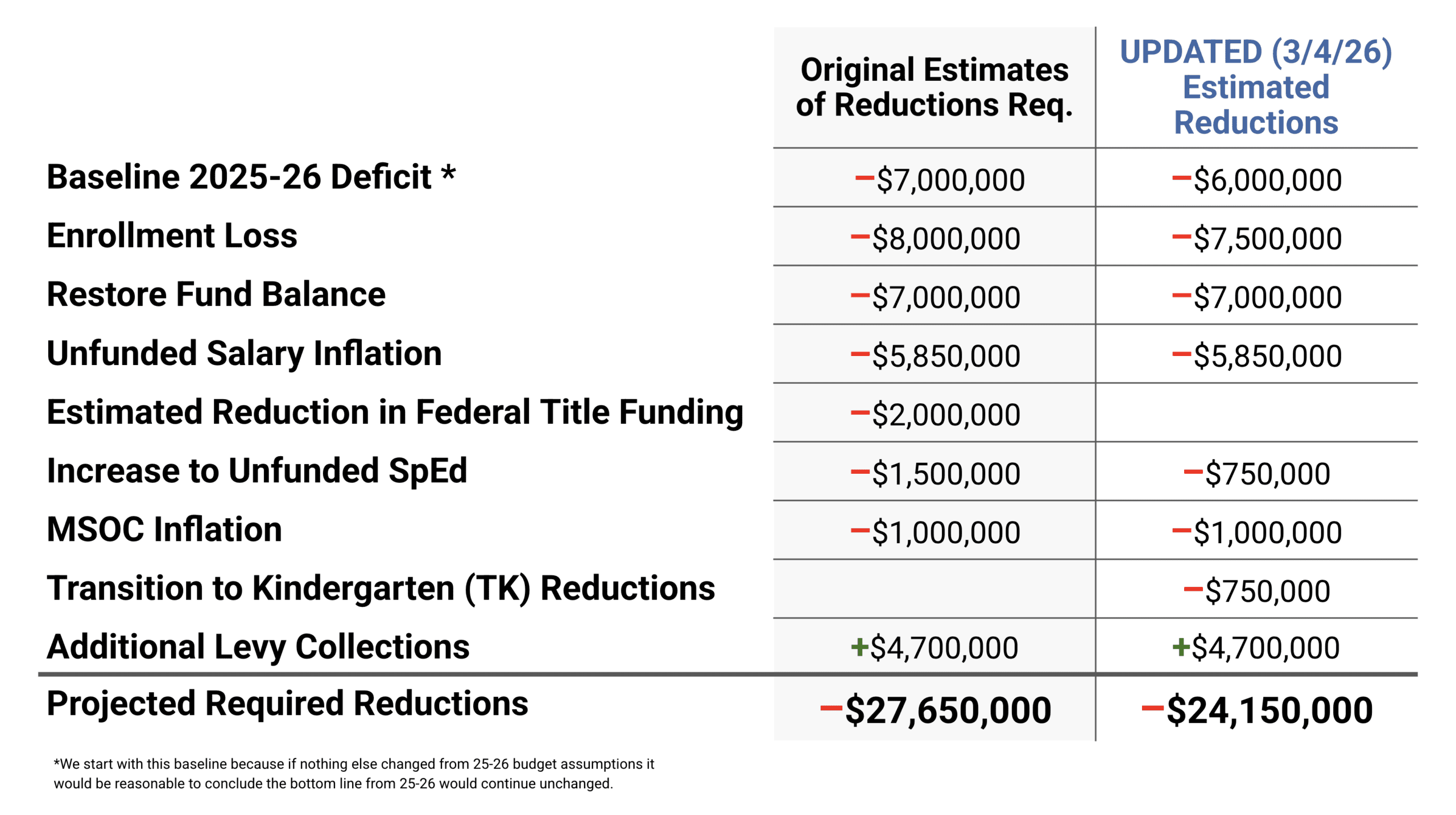
Even after making $34 million in reductions last year, several cost pressures have continued to grow faster than the funding we receive:

  • State revenue has increased only slightly while districtwide expenses, such as staff compensation and operating costs, continue to rise each year.

  • Enrollment has declined more than expected due to lower birth rates and more families choosing homeschool or private school options.

  • Inflation continues to be higher than historical norms for the district, as it is for individual families. 

    • Property/liability insurance premiums have increased an average of 20% over the last six years, while state funding increases in this category has averaged less than 4%.
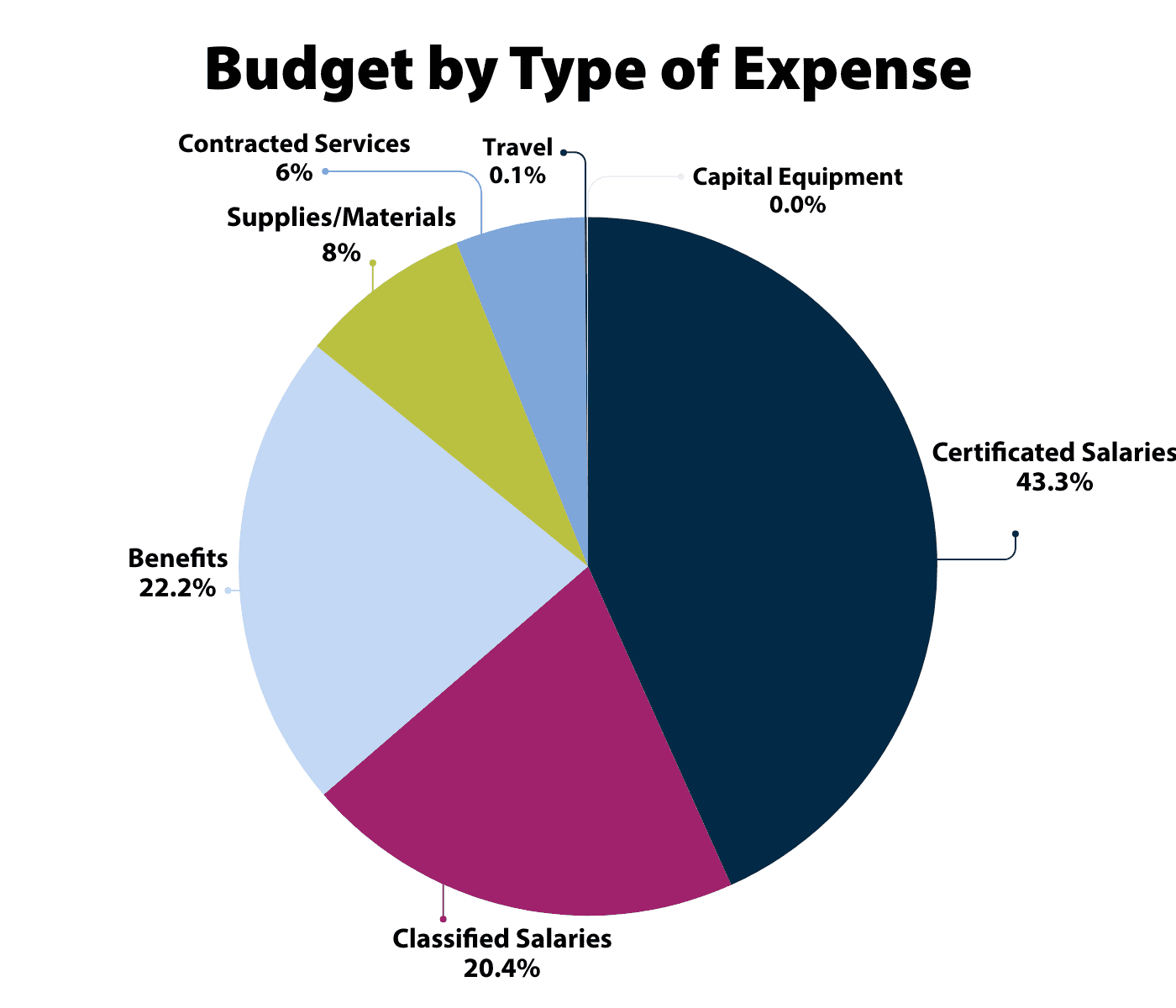
    • Inflation—especially the rising cost of health insurance and other benefits—affects our district even more than a typical household because employee salaries and benefits make up about 85% of our budget. State funding increases help cover some employees’ salary growth, but not all, and state funding especially has not kept pace with the sharply rising cost of employee benefits, leaving us with an ever-growing gap.
  • Special education continues to be significantly underfunded, and the needs of our students have increased at a far faster rate than state support.

  • Our fund balance has dropped to nearly zero because we have needed to use savings to cover costs. We now must begin restoring it for long-term stability.

The good news is that some of these increasing costs have been somewhat offset by increasing Levy Collections. We again thank our community for supporting public schools and students.

Timeline

  • February

    • Develop model scenarios to meet the $21 million reduction goal
    • Work with district, labor, school leaders to refine options
    • Review possible paths with the board for feedback
    • Adjust approaches based on board input
  • March

    • Board reviews—and may approve—a recommendation outlining a path to meet the reduction goal
    • If approved, notification of reduced staff would begin
    • Depending on collective bargaining agreements, this may include possible “bumping” processes

Board meeting budget updates

Frequently asked questions about the 2026-27 budget

  • There is a statewide challenge with school funding is not unique to VPS and is detailed by our local ESD 112.
  • Enrollment is the primary and largest source of our funding and it is down approximately 10% since 2019-20. This is largely due to lower birth rates, as we continue to graduate larger classes than our incoming kindergarten classes, although some of it is still due to parent and student preferences and different choices.
  • Staffing costs (especially in very competitive regional and national labor markets) have dramatically increased faster than state and federal funding increases, which are indexed to inflationary calculations. (SOURCE: OSPI) See graph
  • The cost to provide needed special education services and the complexity of the required supports have grown much faster than state and federal funding and continue to do so at a very rapid rate.
  • Inflation has caused costs for supplies, energy, insurance, and other required expenses to increase dramatically in recent years while there has been little to no adjustment in state funding for these items.

This link shows the gap between basic education state funding and what our staffing costs are projected to be based on 2025-26 budget assumptions. VPS also significantly subsidizes state and federal funding for special education. Those formulas do not delineate specific special education staffing, so we do not have a good comparison for our special education staffing levels.

Local levy funding and most recently fund balance (cash reserves) are the non-state/federal funding used to provide these necessary subsidies. Our cash reserves are now essentially completely depleted. 

The statewide transition of school employees to SEBB for employee health insurance created significant cost increases compared to the previous system. Additionally, the McCleary ruling combined with an extremely competitive job market for qualified staff have dramatically increased wage levels. While state funding has also increased at higher-than-normal levels, it has not kept up with the necessary wage increases bargained by all of our employee groups and inflation.

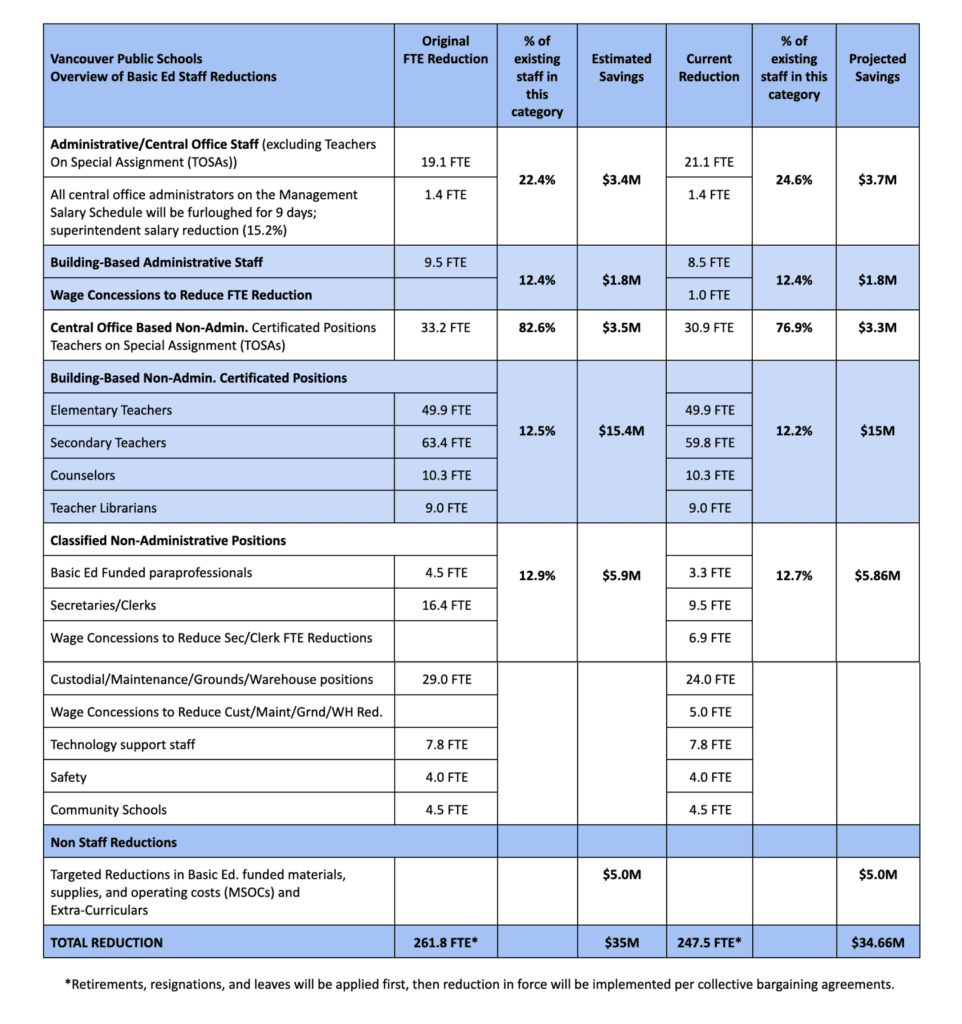
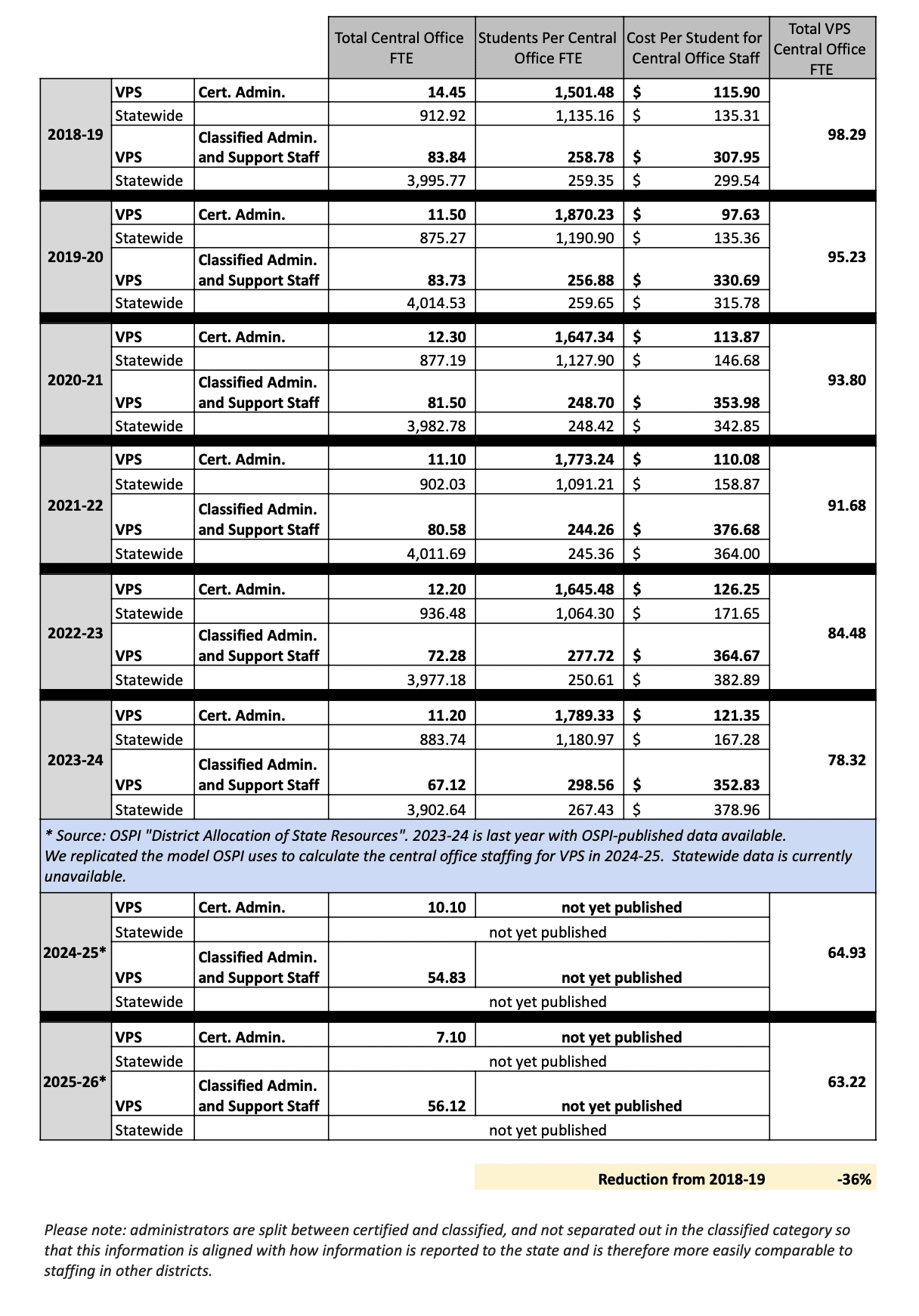
We have decreased the staffing level and costs at central office over the last several years. The percentage of employees in Central Office reduced during our 2024-25 reductions were almost twice the percent of any other employee group. This table shows recent trends in Central Office staffing at VPS, along with statewide averages. We have worked to repurpose previous roles such as Deputy Superintendent to positions that directly support schools with learning and operations. This analysis does not include teachers on special assignment (TOSAs) which may have desks in the Central Office as their work, and often their funding source, is dedicated to a specific instructional program.

This is difficult to directly compare as many districts have very different structures and job titles than VPS. The VPS administrative organizational chart can be found here. Our intent is to support schools with direct service from our central office administrative staff. You may be able to find the org chart(s) of other comparable districts on their respective websites, but VPS is not aware of a standardized statewide report with org chart level details or comparisons.

 We have instructional hour and day requirements in our state. We could change the calendar/week to different schedules, but would still need to meet those requirements. It is unlikely that any type of calendar/week schedule would result in significant savings given the current requirements.

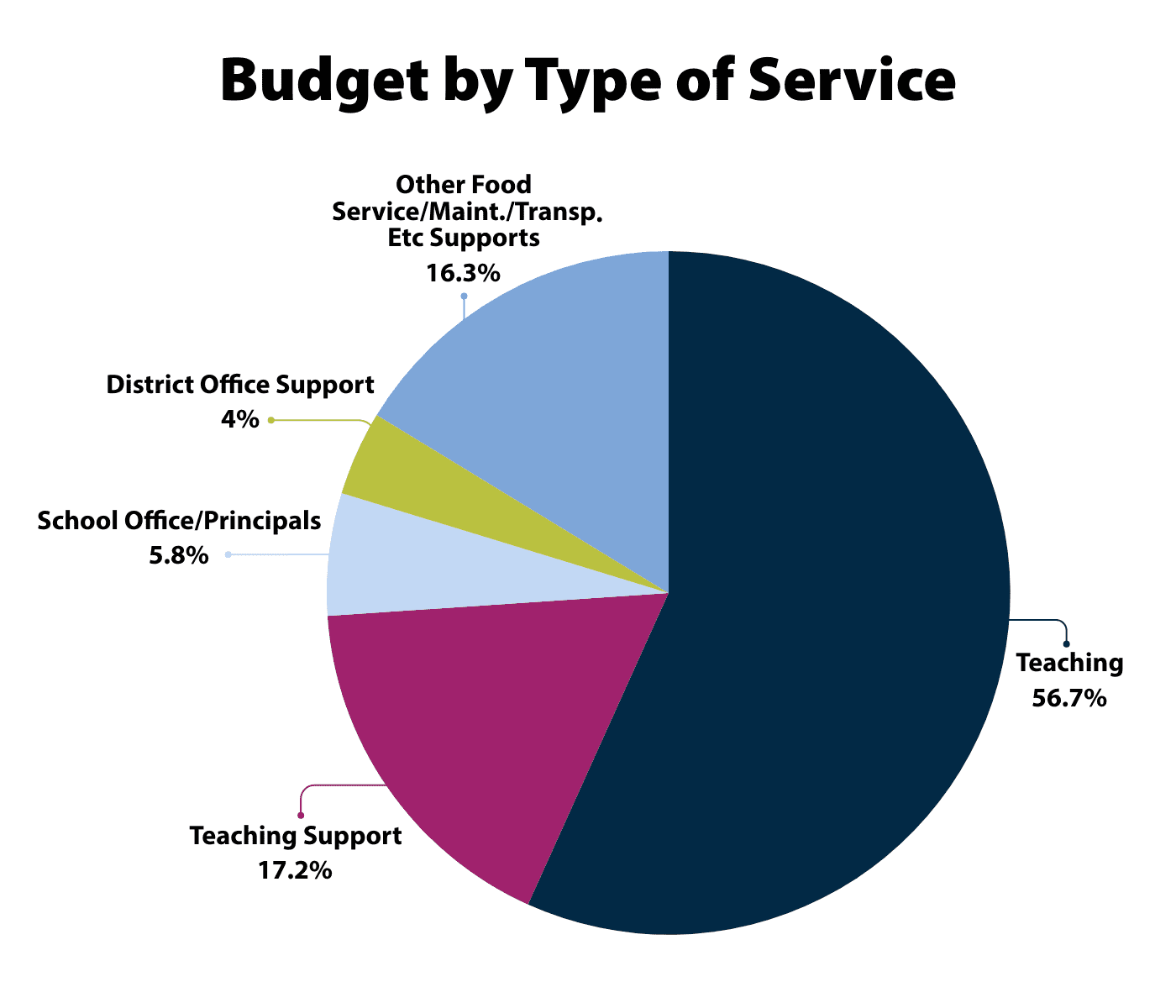
We will determine reductions based on feedback we heard from the community in our most recent budget reductions in 2024-25, along with the priorities outlined by our board. We will be sharing opportunities for our students, staff and community to weigh in on whether those priorities still align with their current wishes. One of our primary goals will be to lessen the impact to staffing categories most closely serving students, but with the reality that the vast majority of our expenditures are for staff that are directly serving students.

The more detailed, program-level decisions will be informed by our strategic plan and consultation with student, staff, parent and community advisory groups, as well as meetings with leaders of all labor groups.

The board of directors is responsible for approving the final budget. VPS leadership makes recommendations to the board based on cost analyses and feedback from multiple sources. Recommendations are made after consultation with staff, labor leaders, advisory groups (staff, parent, student, and equity) and input from our community.

These decisions will all be difficult because there are no positions or expenses that are not designed to directly or indirectly support students. We use student-centric student information focused on priorities that emerged through our strategic plan to help us center our community’s feedback on what they believe offers the most value, and will prioritize supports and services that have the greatest impact on our students.

Unfortunately, the breakdown of our costs doesn’t allow for that to be a realistic approach. Salaries and benefits are about 85% of our budget. Almost all of the remaining 15% goes to non-staffing–but essential–costs for items required either for safety, business requirements or by state mandates.

This 15% is reserved for cost items like utilities, property/liability insurance, custodial supplies, software for required state enrollment and fiscal reporting, etc.

There is a small portion of ‘discretionary’ non-employee costs which is less than the amount we need to cut to balance the budget.

We have been able to maintain higher than state-allocated staffing levels the past several years. We can no longer sustain those levels. With less staff to serve students, there could be an impact on class sizes, program options, and general services.