
Vancouver Public Schools

Budget information

Budget

A well-managed budget is key to being able to deliver on our commitment to offer every student a quality education, safety, and resources for well-being.

It is important we make the right decisions on how to allocate the funding we receive in order to provide the many things necessary to allow for learning, including but not limited to:

  • transportation to and from school
  • meals
  • classroom instruction
  • special education supports
  • highly capable instruction supports
  • safety officers
  • counseling and mental health support
  • well-maintained grounds and buildings 
  • extracurricular activities and offerings

We take our responsibility seriously to spend our money in a smart way that helps us achieve our goals of healthy students, schools, and communities, ultimately strengthening our Vancouver community.

Our hope is to offer visibility into these funding and spending details in an effort to foster a greater understanding of our funding sources, allocations, and range of programs and services that are provided to those in our district. 

Budget Trends Over Time

Like many school districts across the state and country, VPS is facing significant budget challenges because the costs of operating schools are rising faster than state and federal funding. The charts below show how rising costs, enrollment changes, and funding over the last several years have changed.

Percentage of Basic Ed Staffing Funded by State
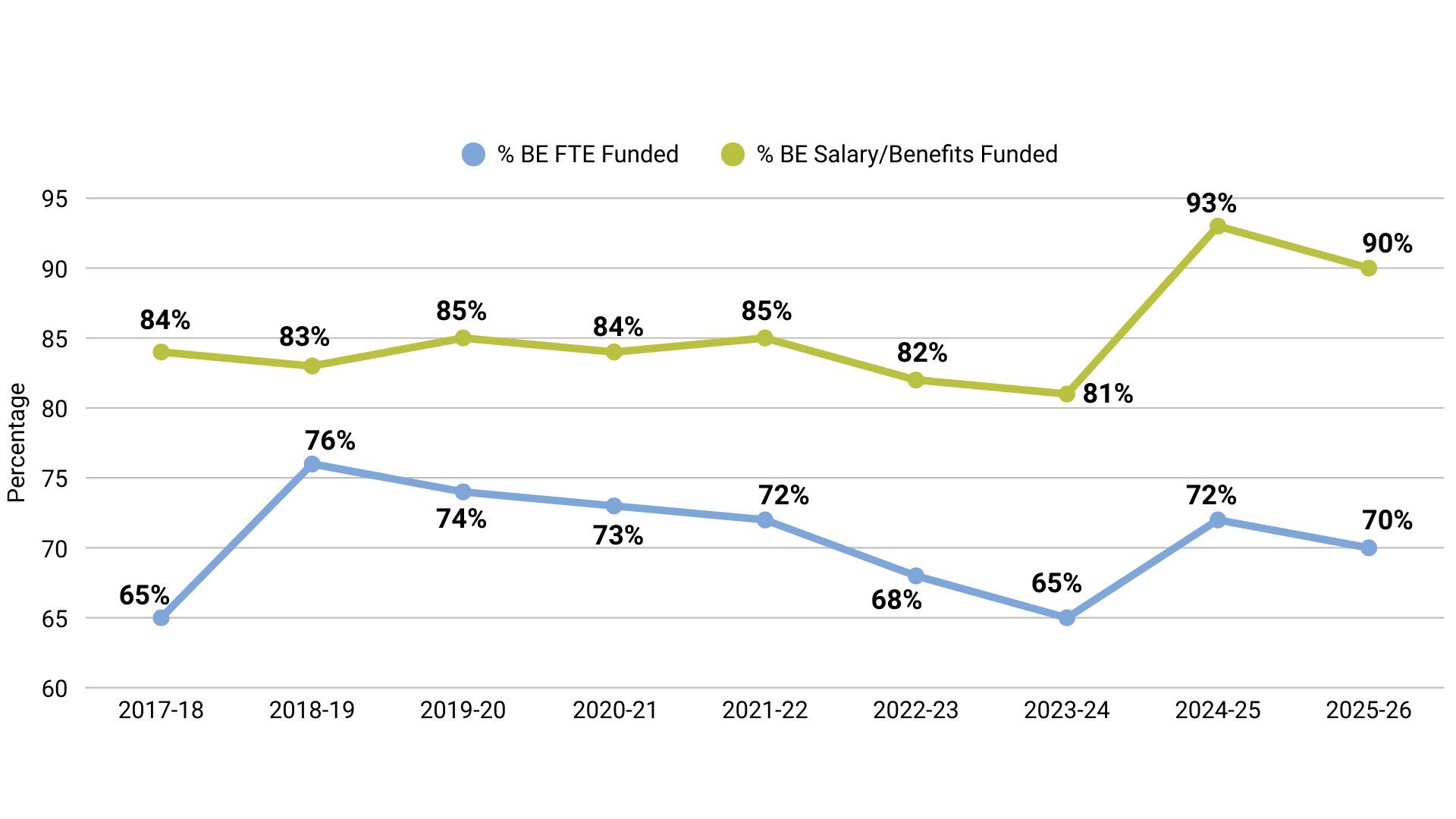
A line chart compares the percentage of basic education staffing funded by the state with the district’s actual staffing cost trends from 2017–18 through projected 2025–26. State funding consistently covers a smaller share than needed, with a visible funding gap in recent years.

State funding covers only part of the staffing costs required to operate schools, leaving the district to bridge the remaining gap.

Recurring Budget Deficit
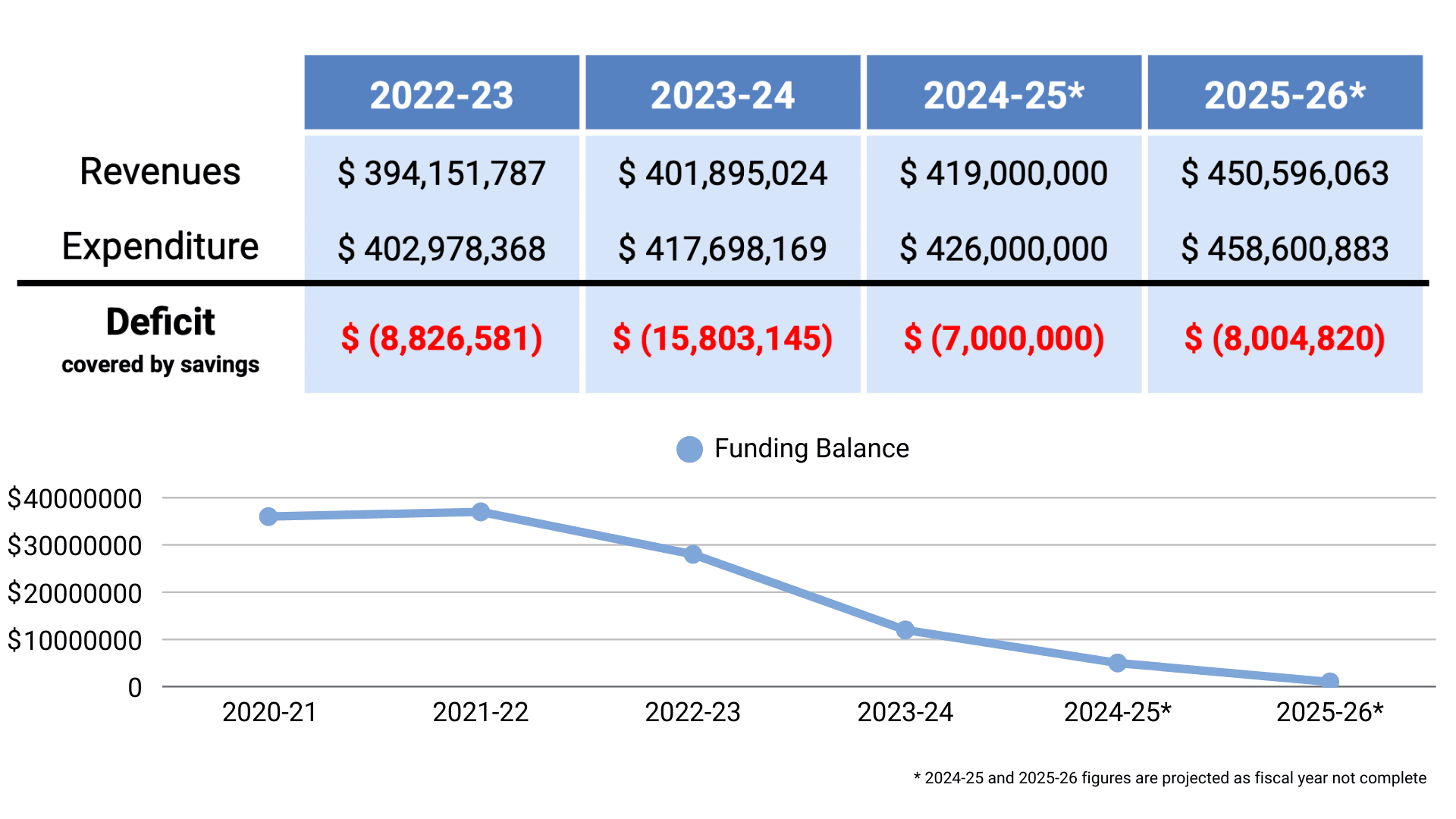
A table and line chart titled “Challenge #1: Recurring Budget Deficit” compares Vancouver Public Schools revenues and expenditures from the 2022–23 school year through projected 2025–26. In each year, expenditures are higher than revenues, resulting in deficits covered by district savings. The accompanying chart shows savings steadily declining over time as deficits continue. A note indicates that the most recent figures are projections because the fiscal year is not complete.

Annual spending has exceeded revenues in recent years, requiring the district to rely on savings to balance the budget.

Enrollment Decreases
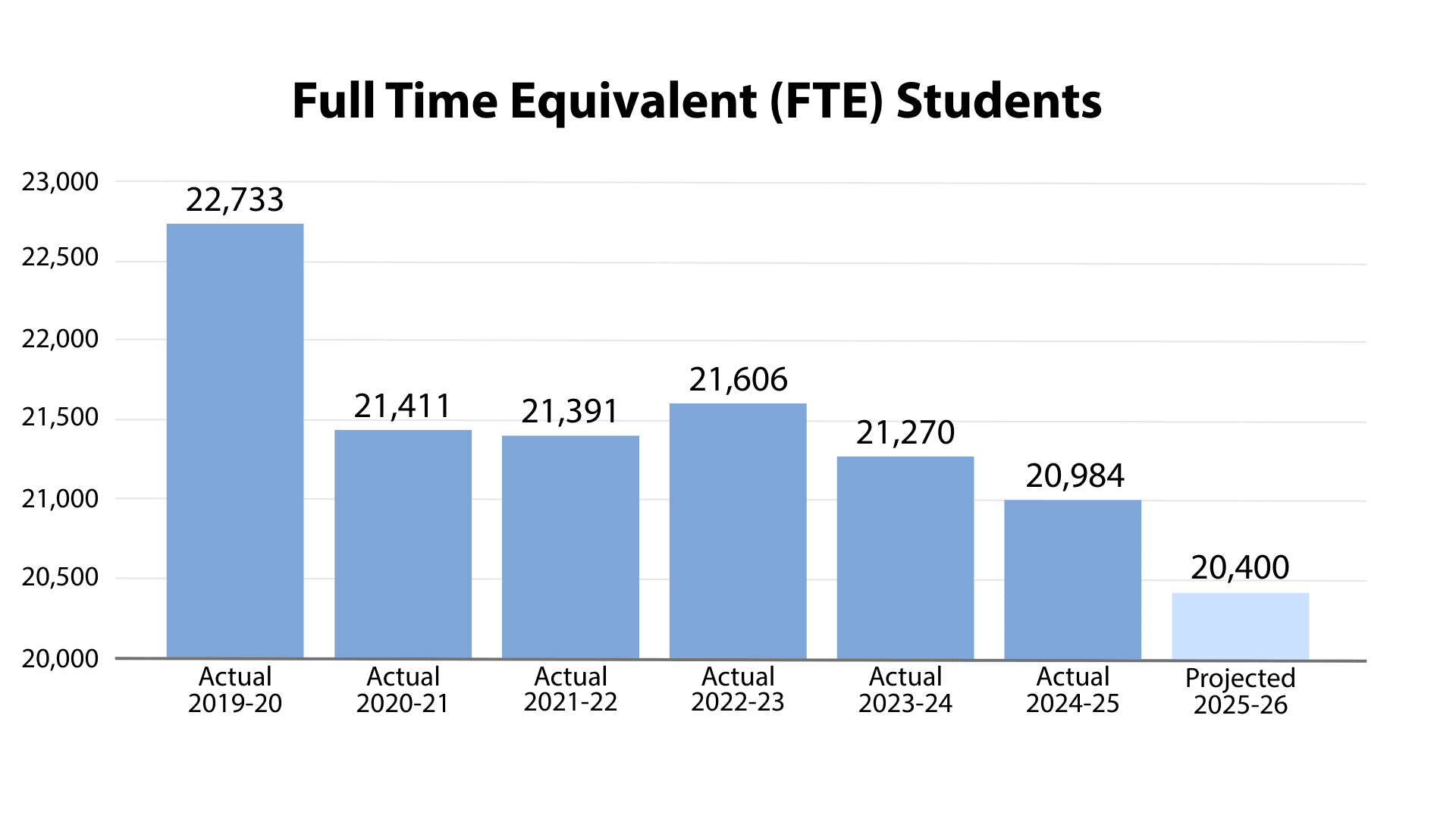
A bar chart illustrates VPS full-time equivalent student enrollment from 2019–20 through projected 2025–26. Enrollment peaks in 2019–20 and trends downward overall, with the lowest projected level in 2025–26. Because funding is tied to enrollment, this decline directly reduces revenue.

Enrollment has gradually declined over several years, reducing state funding that is tied to student counts.

Inflation of Costs Outpacing Funding
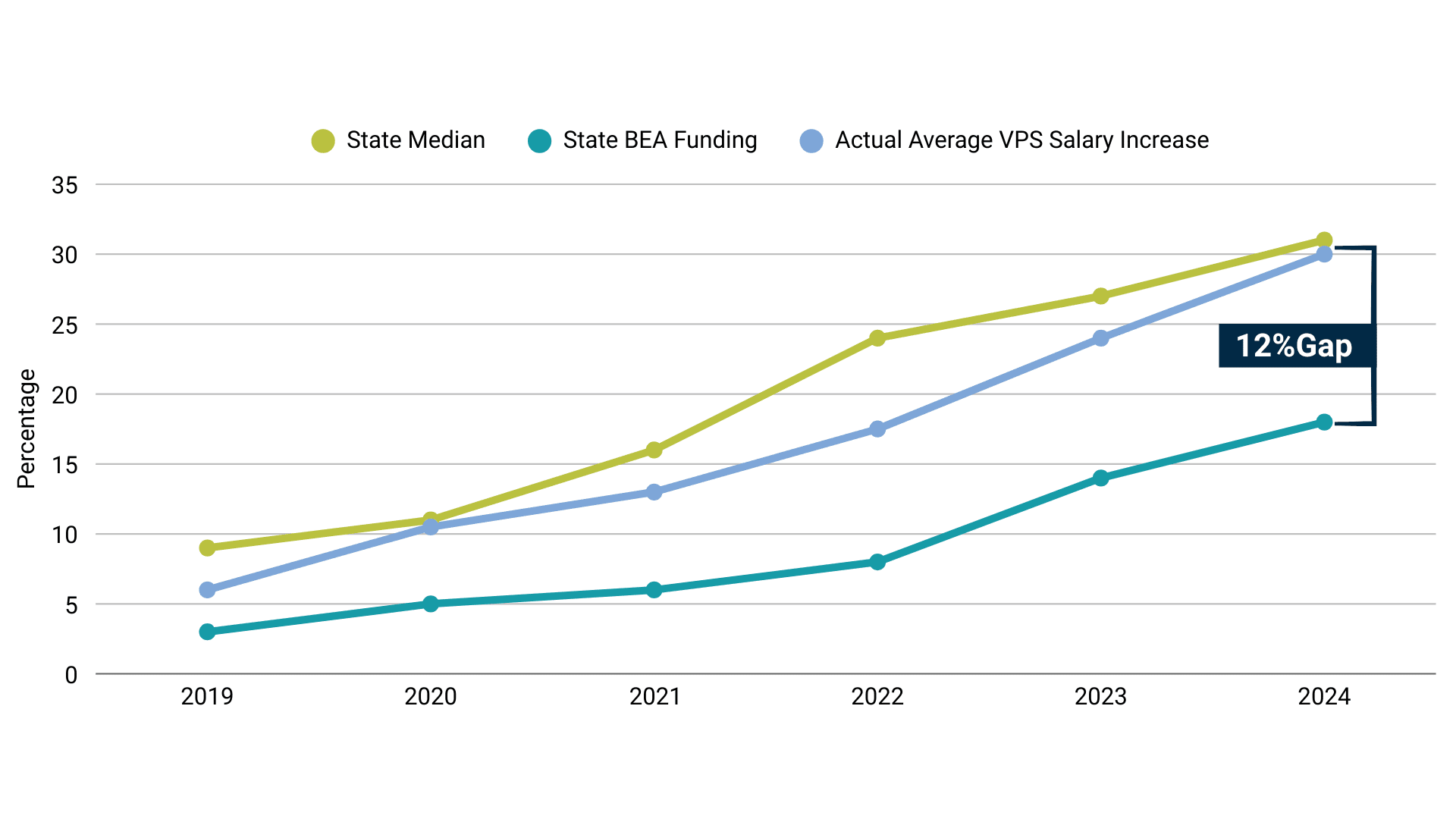
A line graph tracks three trends: state median funding growth, BEA funding growth, and the district’s average salary increases from 2019 to 2024. District cost increases consistently exceed funding growth, creating a visible gap that peaks in the most recent year.

District costs have increased more rapidly than state funding levels, contributing to ongoing budget pressures.

Inflation of Costs Outpacing Funding
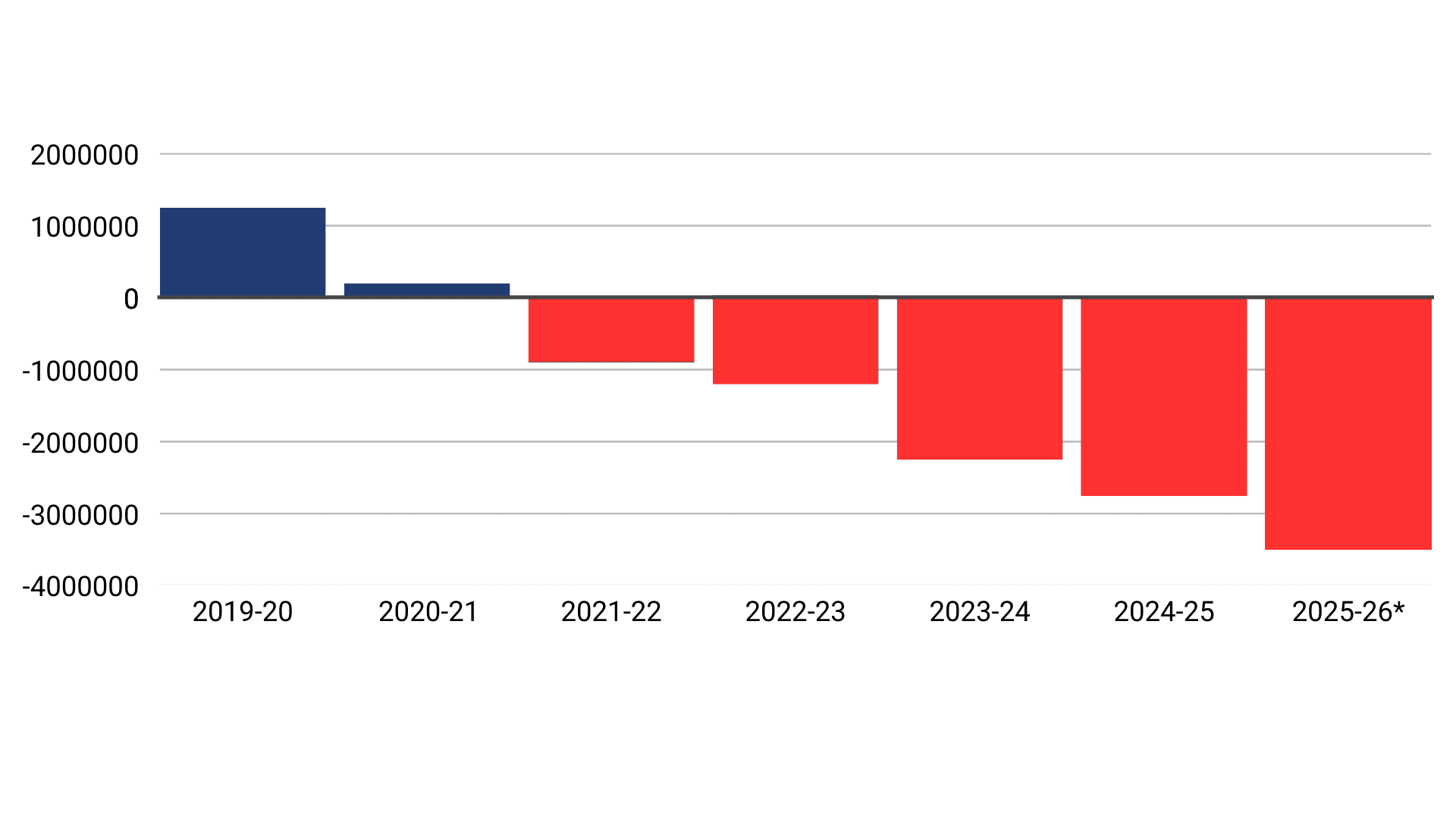
A bar chart compares Materials, Supplies, and Operating Costs (MSOC) funding with inflation-driven expense increases across multiple years. Early years show small positive margins, followed by steadily larger shortfalls as inflation accelerates beyond funding growth.

Inflation has increased operating costs faster than MSOC funding adjustments, placing additional pressure on the district’s operating budget.

Underfunding of Special Education
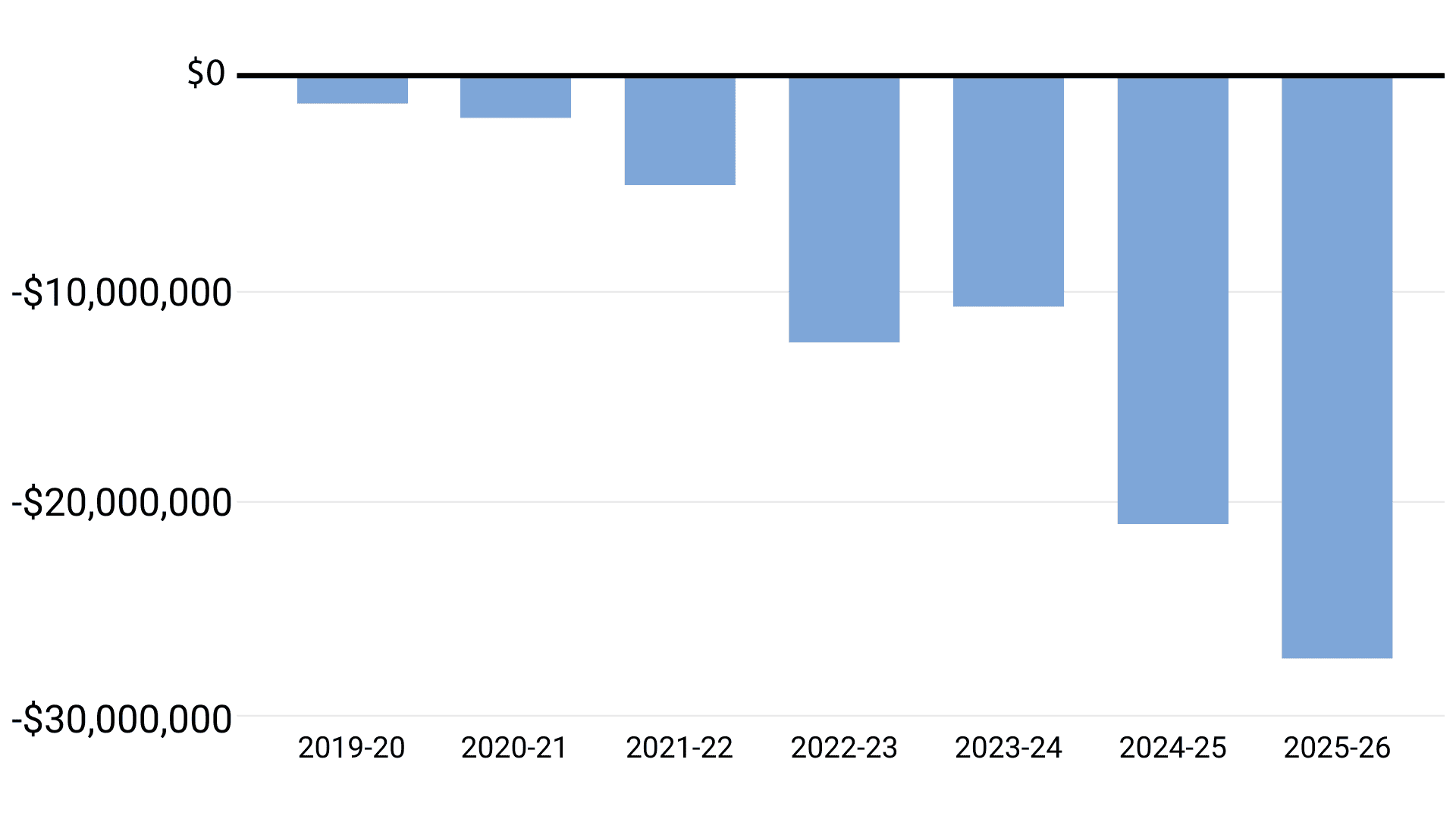
A vertical bar chart displays yearly special education funding gaps from 2019–20 through projected 2025–26. Each bar shows a growing negative shortfall, indicating that funding does not fully cover rising service costs. The projected deficit reaches its largest level in 2025–26.

Each year, the gap between special education costs and funding widens, requiring additional district resources to maintain services.
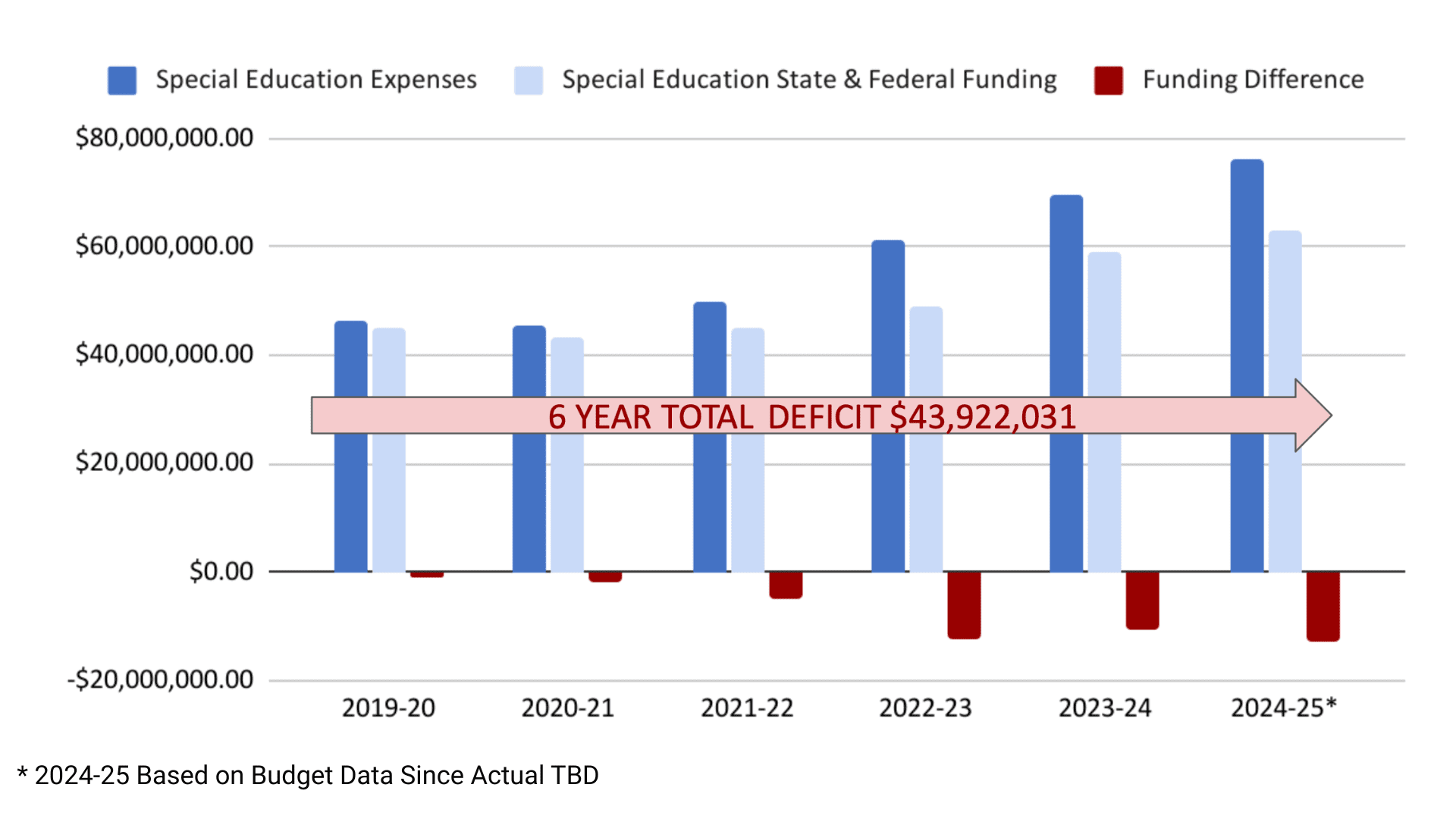
VPS Special Education Expenses, Special Education State & Federal Funding and Funding Gap

A bar chart compares special education expenses with combined state and federal funding from 2019–20 through 2024–25. While funding increases modestly, expenses rise more sharply each year. The chart highlights a six-year cumulative shortfall of roughly $43.9 million, indicating the district must cover significant unfunded special education costs.

Special education costs continue to grow faster than state and federal funding, leaving the district responsible for a large and increasing portion of expenses.

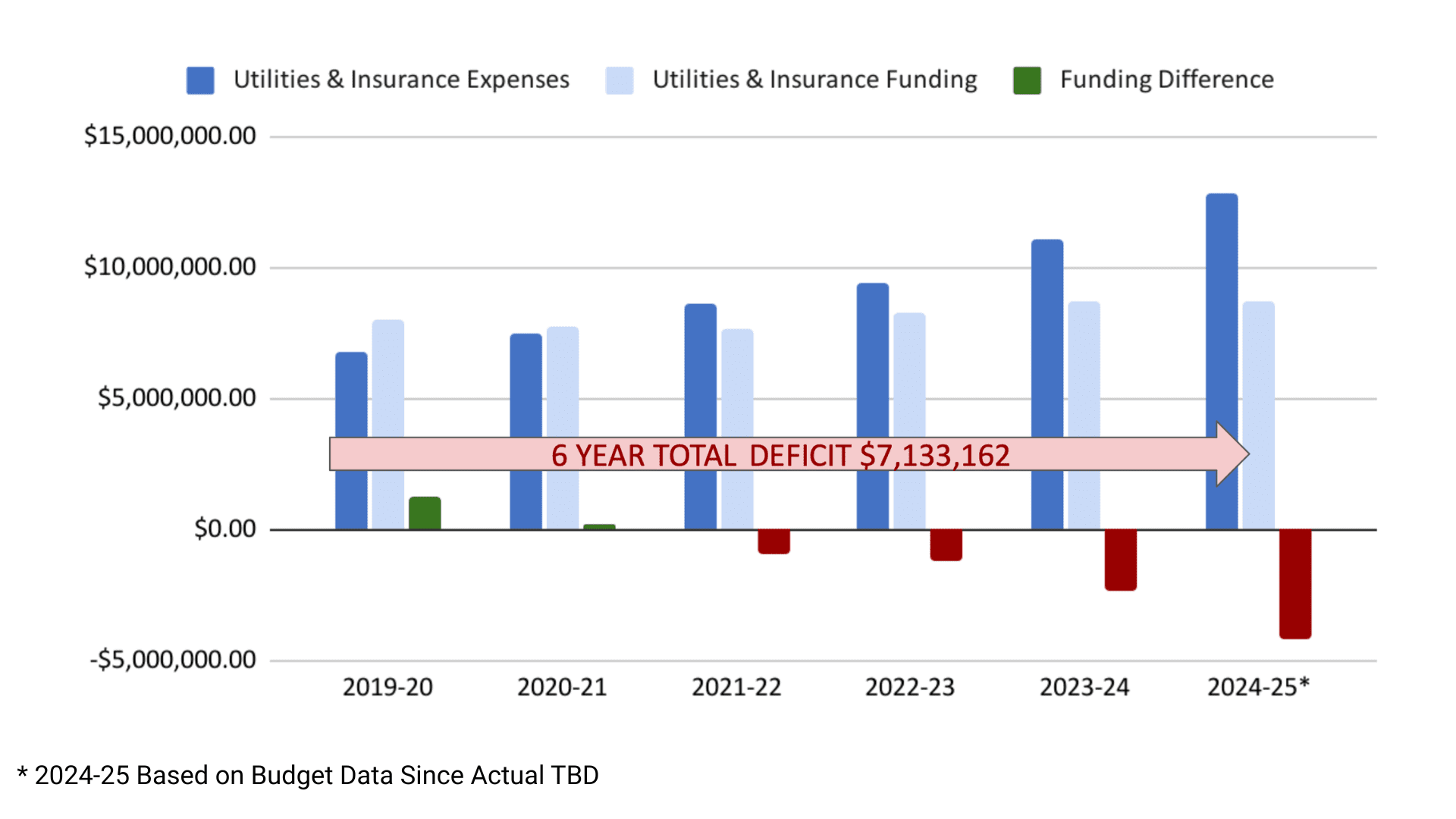
VPS Utilities & Insurance Expenses, Utilities & Insurance Funding and Funding Difference

A multi-year bar chart compares VPS utilities and insurance expenses with the amount funded each year from 2019–20 through 2024–25. Expenses rise steadily while funding grows more slowly, creating an increasing shortfall. The chart highlights a six-year cumulative deficit of about $7.1 million, illustrating that operating costs have outpaced funding support.

Utilities and insurance costs have risen faster than available funding over several years, resulting in a growing gap the district must absorb through its general budget.

Resources about state funding

Budget reports

Historical data

The following charts provide historical budget information about levy funding, district spending trends, and staffing. They’re here as a reference, but please note the dates below, as the charts have not been updated since the district transitioned to other reporting platforms and technology. The charts offer background on VPS funding over time.

  • 2019–2020 Levy commitment summary: The levy funds a variety of positions in the district. This graph breaks down the funding by role and shares the average levy dollars per student from 2019-2020.

  • 2021–2024 budget trend: This chart highlights how the VPS Budget changed from the 2021-22, 2022-23, and 2023-24 school years. Please note this budget includes federal funding (ESSER funds) awarded to help address the COVID-19 pandemic. These funds must had to be spent by 2023, and will not be replaced. 

  • 2019–2020 FTE funding comparison: This chart shows VPS’s staff funding compared to the statewide average and other districts in the area from 2019-2020.  

Budget news